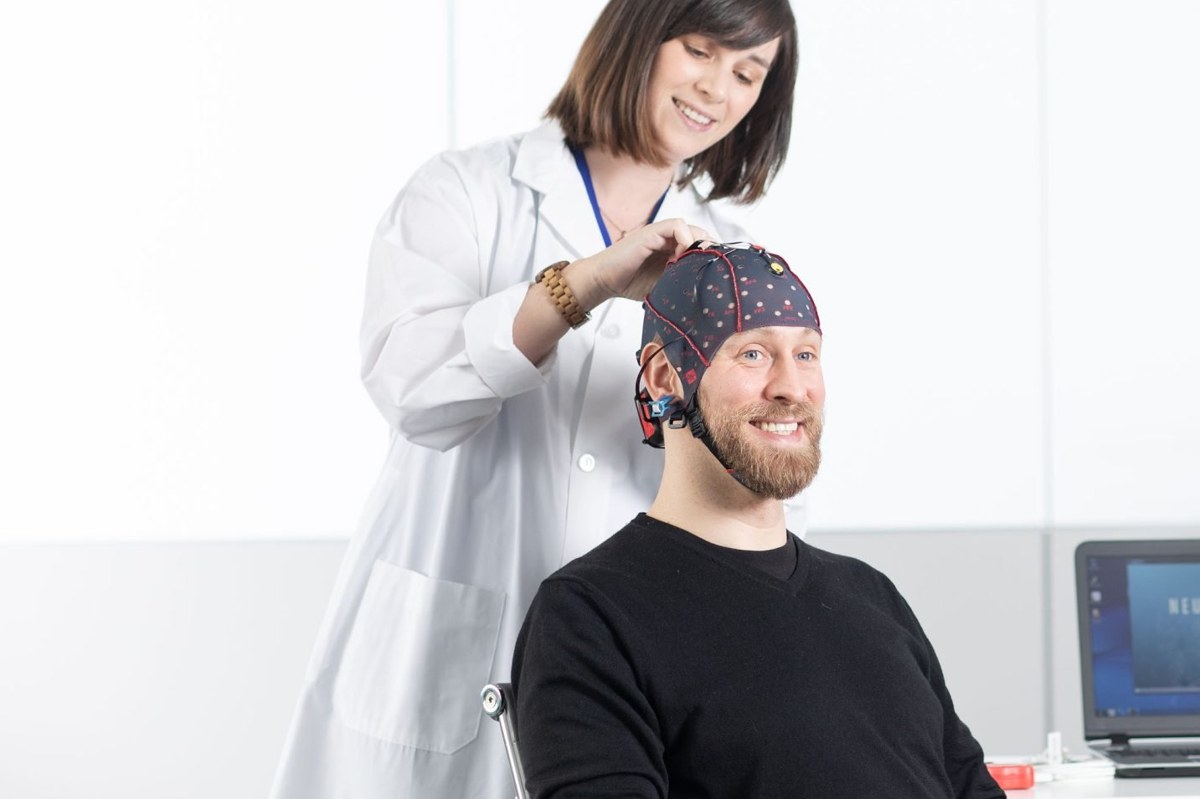
These systems record EEG while a patient completes simple tasks, then measure event-related potentials (ERPs): the brain’s response to a sound, image or decision. Each produces a report for a clinician to read with the history, exam and rating scales. We ranked on five criteria, in this order of weight:
FDA status of the exact product. A 510(k) clearance beats a listing or exempt code; a foreign license alone doesn’t count in the US.
Upfront capital. Whether you buy EEG hardware or the vendor includes it.
Measurement depth. How many ERP tasks run and whether behavior is reported alongside.
Workflow. Who runs the session, how long it takes, and whether training is included.
Track record. Years in clinical use and regulatory history.
Device Pulse has not tested these systems. Rankings come from FDA records, company materials and published coverage, linked on each card.
No 510(k) number found; Health Canada Class II license
Not published; quote required
Health Canada licensed
The six systems, reviewed
1
Best overall
VoxNeuro cfNI
Best for: practices that want an FDA‑cleared assessment with no equipment purchase
The only system here with a published model that includes the EEG hardware and charges per assessment, backed by a 2026 FDA 510(k) clearance.
A trained staff member runs the session and the software scores it against healthy adults aged 18 to 70. The repeat‑visit view suits TMS clinics: a baseline before treatment and repeats during the course. VoxNeuro describes cfNI as billable while stating that coverage depends on the payer, so confirm codes with your billing team first.
Strengths
No capital purchase: EEG hardware is included
Report pairs ERP measures with task performance and tracks change across up to four visits
Operator and interpretation training included
Watch for
New clearance, so little US commercial history to check
Age range stops at 70
Per‑assessment pricing costs more over time at high volume; get minimums in writing
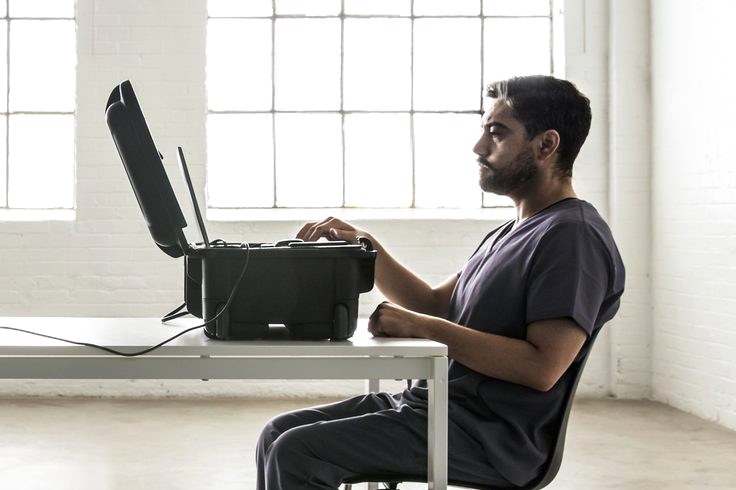
VoxNeuro’s portable EEG kit, which comes with the service. Image: VoxNeuro (source).
FDA status
510(k) K253015 (2026)
Pricing model
Per assessment plus one‑time setup and training fee; hardware included
Session
20 to 30 minutes, run by trained staff
Patients
Adults 18 to 70
Measures
Resting EEG plus ERPs across oddball, go/no‑go, visual memory and flanker tasks
2
Best track record
Evoke Neuroscience eVox
Best for: practices that want a system with years of US clinical use
Cleared in 2017 and sold into primary care for close to a decade. Choose it if a long US track record matters more than a new clearance.
Evoke now markets the system as Evoke by Firefly Neuro. Ask whether the hardware is bought, leased or included before comparing it with a per‑assessment model.
Strengths
In US clinical use since its 2017 clearance
Reports built so clinicians don’t read raw EEG
More practices and billing experience to learn from
Watch for
Pricing and hardware terms not published
Patient‑facing coverage claims are company statements; verify with payers
Get the full five‑year cost, including software and supplies
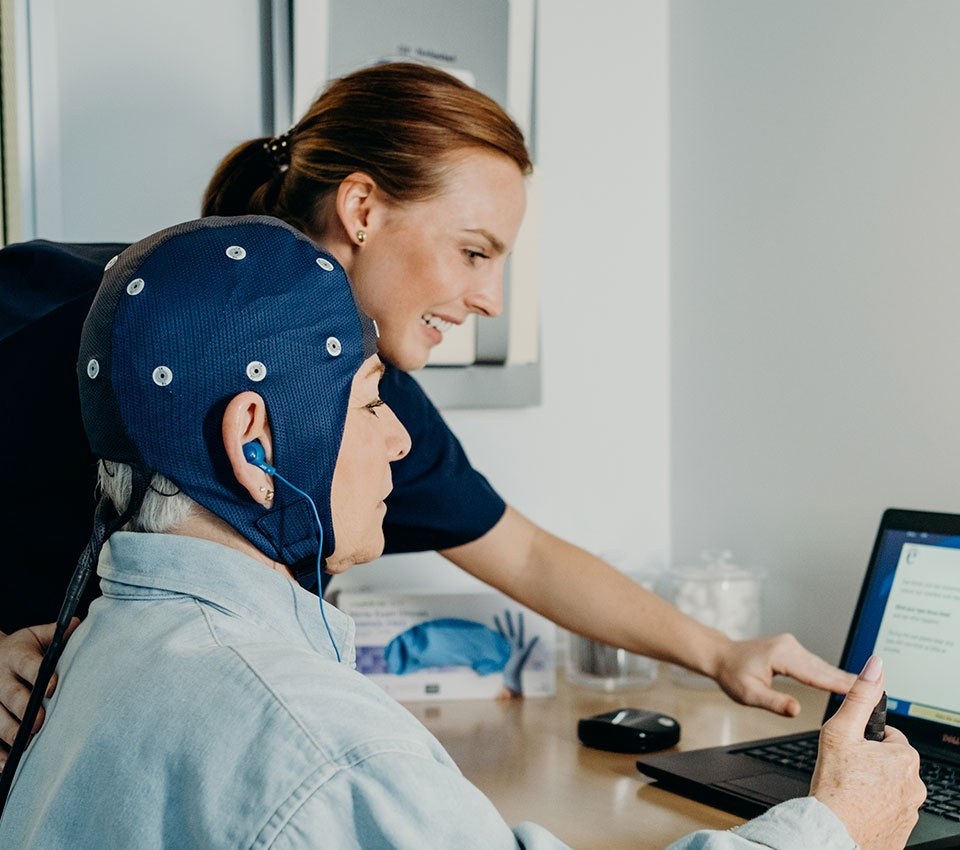
A clinician walks a patient through an eVox session, with the EEG cap in place. Image: Evoke Neuroscience (source).
FDA status
510(k) K171781 (2017); indications expanded 2018
Pricing model
Not published; quote required
Session
Not published
Patients
Per cleared indications
Measures
Quantitative EEG, LORETA source imaging and ERPs
3
Fastest session
Universal Brain UB ERP System
Best for: psychiatry and TMS practices that need a short test
A dry‑electrode cap with a company‑reported assessment time under five minutes. Cleared in 2026 and aimed at psychiatry.
Compare a sample report side by side with a longer protocol before deciding the shorter session is worth it.
Strengths
Dry electrodes, no gel
Short session fits a busy clinic schedule
Depression studies under way in the US and Japan
Watch for
Commercial program is months old
Speed claim is the company’s own
A sub‑five‑minute protocol captures fewer tasks than a 20- to 30‑minute one
FDA status
510(k) K253767 (June 30, 2026)
Pricing model
Not published; quote required
Session
Under 5 minutes, company‑reported
Patients
Per cleared indications
Measures
EEG and ERP signals; clinician interprets
4
Widest wellness footprint
WAVi Scan
Best for: wellness and concussion‑baseline programs
Cleared in 2022 and widely sold into wellness and concussion‑baseline settings, with a 2023 FDA warning letter buyers should read first.
Ask WAVi what changed after the warning letter before signing.
Strengths
Established install base outside neurology
P300 measures reported for clinician use
Headset designed for office settings
Watch for
FDA warning letter in 2023 over marketing and software validation
Clearance summary lists bench testing only
Confirm which claims your practice may make to patients
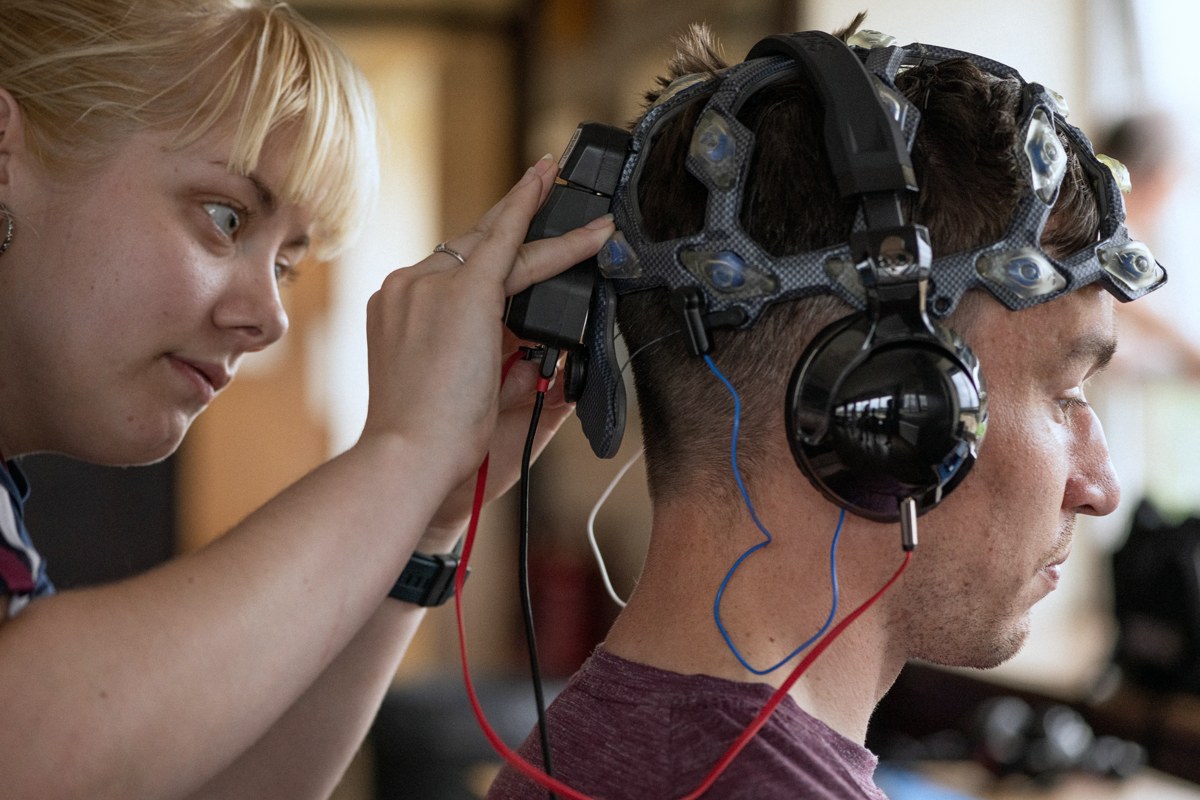
A technician fitting the WAVi headset. Image: WAVi (source).
FDA status
510(k) K213900 (2022); FDA warning letter Oct 2023
Pricing model
Not published; quote required
Session
Not published
Patients
Per cleared indications
Measures
EEG and ERP metrics including P300 latency and voltage
5
Oldest clearance here
Neuronetrix COGNISION
Best for: buyers comfortable with an older platform
Cleared in 2015 as one of the first portable ERP systems for private offices, with little recent US commercial activity.
The clearance covers recording and analysis. Treat concussion and dementia claims in company listings as marketing.
Strengths
Cleared for private offices and small clinics
Portable headset
Long‑standing clearance
Watch for
Disease‑specific validation claims go beyond the cleared indication
Confirm support and software updates before signing
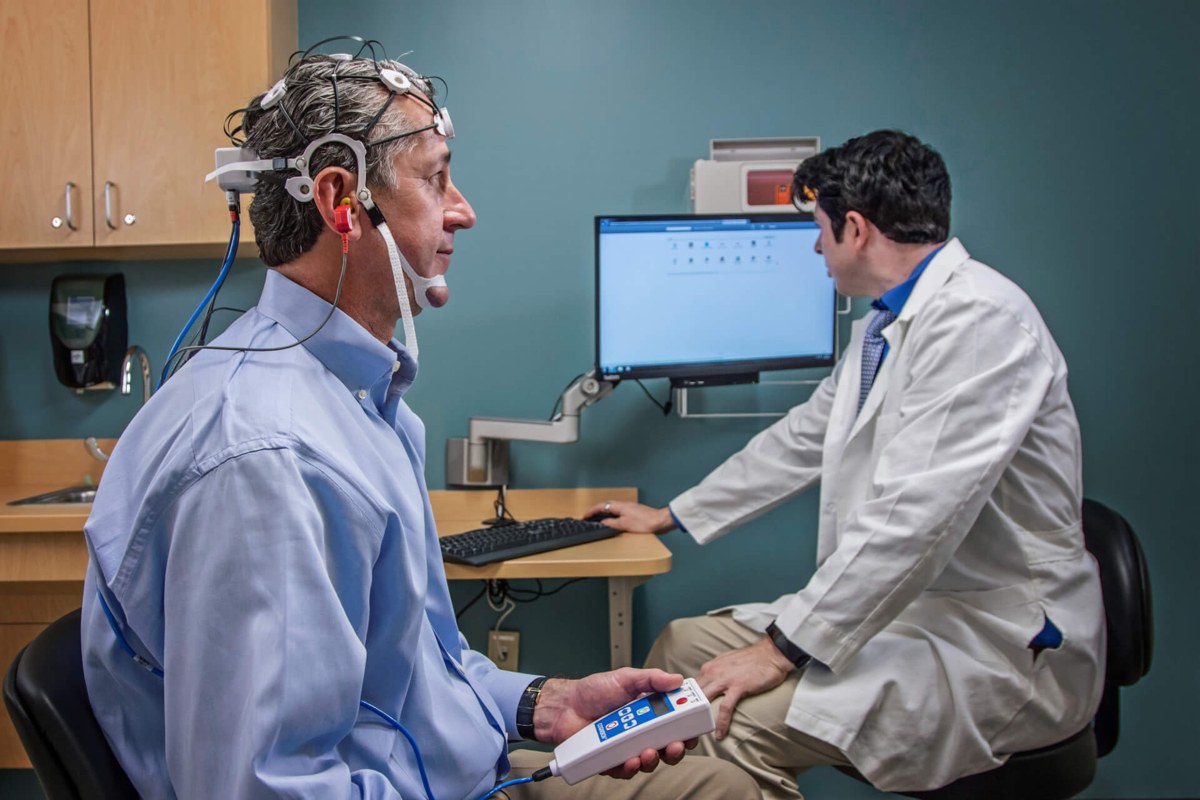
A patient wearing the COGNISION headset while a clinician runs the test. Image: Neuronetrix (source).
FDA status
510(k) K141316 (2015)
Pricing model
Not published; quote required
Session
Not published
Patients
Per cleared indications
Measures
EEG and auditory evoked potentials
6
Health Canada licensed
NeuroCatch Platform
Best for: Canadian practices and concussion clinics
Health Canada licensed, with a company‑reported six‑minute audio test. Device Pulse found no US 510(k) number, so treat it as unconfirmed for US clinical use until the vendor produces a clearance letter.
The test reports N100, P300 and N400 responses.
Strengths
Short audio‑based protocol
Latency and amplitude for three ERP responses
In use in Canadian concussion and brain‑health clinics
Watch for
Vendor listings say FDA‑cleared without a number
Pricing not published
A clinician fitting the NeuroCatch cap. Image: HealthTech Connex, maker of NeuroCatch (source).
US status
No 510(k) number found; Health Canada Class II license
Pricing model
Not published; quote required
Session
6‑minute audio sequence, company‑reported
Patients
Per licensed indications
Measures
N100, P300 and N400 ERPs
Not EEG: digital cognitive tests
These tablet-based tools measure test performance, not brain electrical activity. They’re cheaper and faster to deploy, and many practices screen with one and follow up with an EEG/ERP system.
Its 2015 FDA De Novo authorization created the cognitive assessment aid category. The five‑minute screen covers memory, visuospatial and executive function and is sold to audiology, optometry and primary care.
Markets an FDA‑registered Class II digital assessment for primary care, with reimbursement guides for CPT 96132. Its materials use both “registered” and “cleared”; ask which applies.
What is the best EEG/ERP cognitive assessment system for a practice?
On FDA clearance and upfront cost, VoxNeuro cfNI ranks first: it is 510(k) cleared (K253015) and includes the EEG hardware with per-assessment pricing. Evoke eVox is the choice if a long clinical track record matters most.
Is VoxNeuro cfNI FDA-cleared?
Yes. VoxNeuro’s cfNI received FDA 510(k) clearance K253015 in 2026 for prescription use in adults 18 to 70. It supports clinician interpretation and does not make a diagnosis.
Which EEG/ERP system has the lowest upfront cost?
As of November 2026, no vendor publishes prices, so a true cost comparison needs quotes. VoxNeuro is the only one whose published model includes the EEG hardware with per-assessment pricing, so it is the only one confirmed to need no equipment purchase. Ask the others for hardware, setup and per-assessment terms.
Can an EEG/ERP assessment diagnose dementia or depression?
No. The FDA clearances cover recording, analysis and reporting. A qualified clinician interprets the report alongside the clinical assessment.
Why is NeuroCatch ranked last?
Device Pulse found a Health Canada license but no US 510(k) number. US practices should ask the vendor for an FDA clearance letter before buying.
Get the Device Quote Review Kit
Open the printable buyer checklist now, then get the planned Tuesday brief with price, FDA, safety, evidence, and manufacturer signals.
Free kit available immediately. Planned Tuesday brief. Unsubscribe anytime. Privacy.
Rome Thorndike
Rome Thorndike is the CEO & Founder of Provyx, which provides GTM intelligence and data validation for healthcare companies, including EngagedMD and BTL Industries. His healthcare experience includes Microsoft accounts such as John Muir Health and commercial advisory work for Kaironexus.